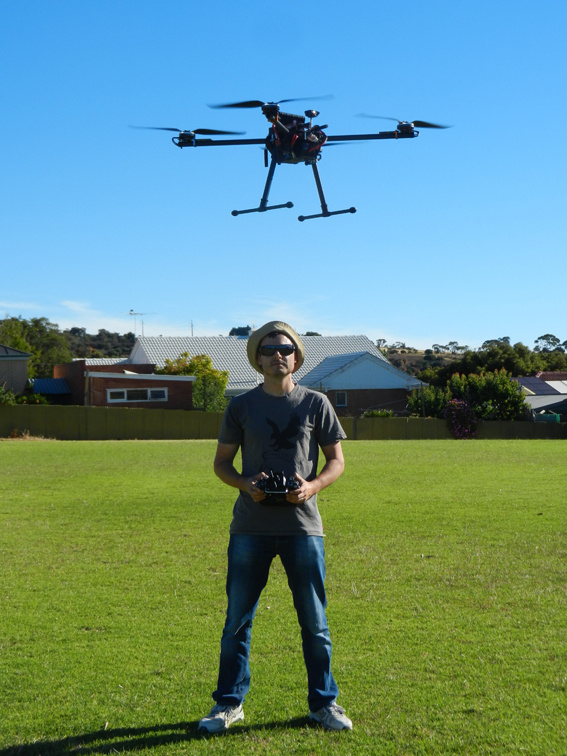
Drones for Teaching
A teaching innovation grant that put drones, from nano to micro, into first-year STEM classes at Flinders University.
In 2016 I was awarded a Reinventing Teaching and Learning grant to put drones in the classroom at Flinders University. The grant bought a fleet of small aircraft — nano-drones and micro-drones — for the School of Computer Science, Engineering and Mathematics, and the point was that students would program, build and fly them as part of first-year STEM teaching rather than watch someone else do it.
The timing helped. New federal drone rules had just come into effect allowing very small drones to be flown without certification, which is what makes a classroom fleet practical at all. The teaching ran through the curriculum: the aircraft as a platform for programming, for control theory, for electronics, for surveying and GIS.
Lecturer and research fellow Dr Greg Ruthenbeck has been awarded a Reinventing Teaching and Learning grant that will see drones used in the classroom for the first time at Flinders.
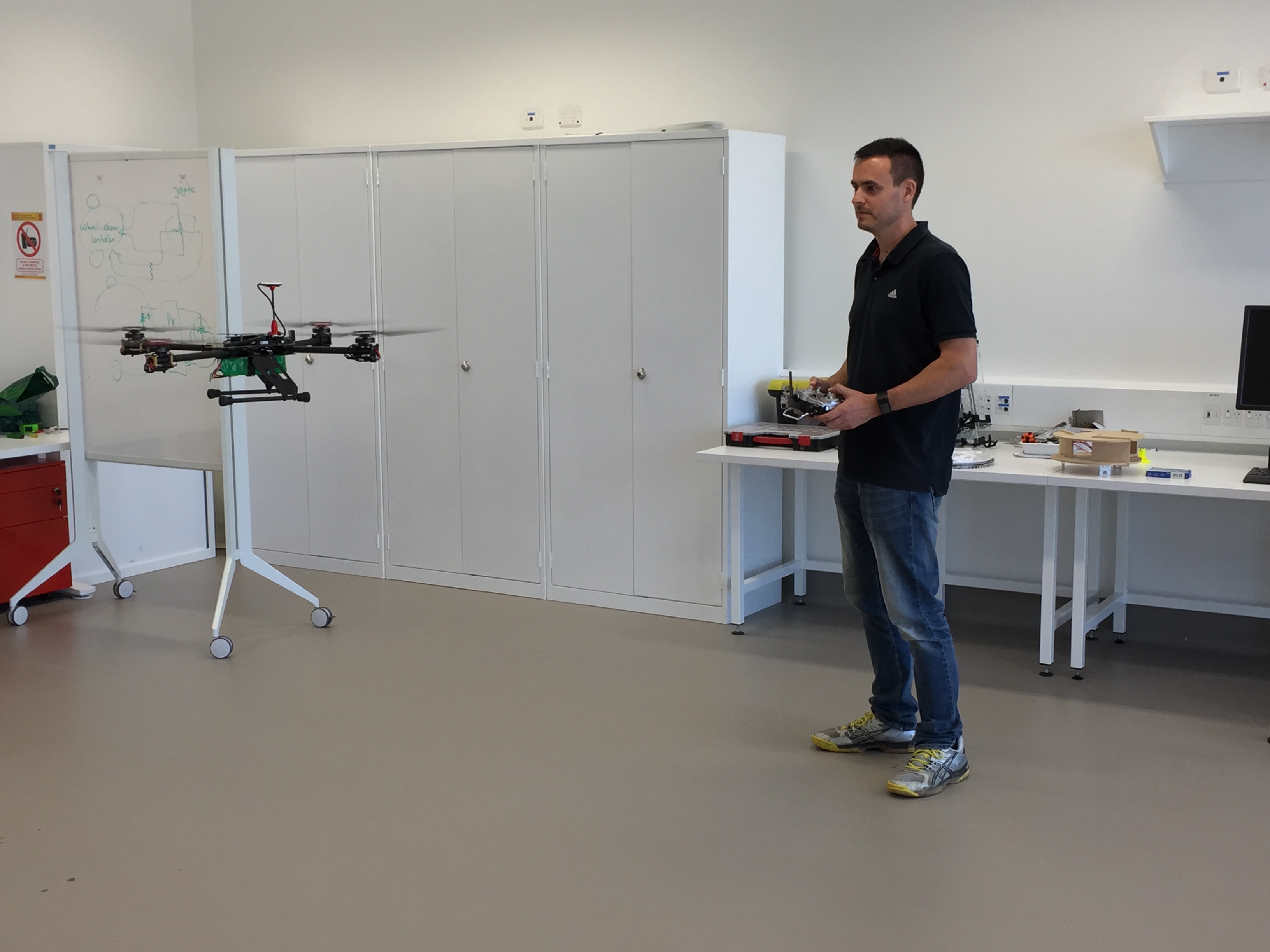
Flinders University wrote it up in October 2016.
A life-long aviation hobbyist, UAV research supervisor, and leading online retailer
A life-long fascination with model aviation is what made the grant obvious to me. I have built models of most kinds: balsa and doped tissue-paper tow-gliders, and 2.5 m wingspan sailplanes with heat-shrink film over the wings. Seeing something you built from scratch become a speck in the blue sky is a thrill, and riding the same thermal as an eagle is a fine way to spend a morning.
Electric radio-controlled helicopters came next. As a child, engines and radios were the expense that limited me to simple aircraft; the early electric helicopters in the hobby magazines were expensive and not very capable, because NiCd packs were heavy and held little power. Once LiPo batteries, brushless motors and 2.4 GHz radios were commodity parts, cheap and capable electric helicopters appeared almost overnight.
I bought a Walkera Dragonfly 36 in 2004. It did not get off the ground without spare parts. With carbon-fibre rods and ping-pong balls lashed to the landing skids I practised for weeks before I could hover it, and then I was hooked. I owned a series of electric helicopters of different sizes and capabilities. The gyros that stabilised their tail rotors are the direct ancestor of the multi-axis stabilisation that makes a drone flyable.
Flight controllers running ArduPilot on MEMS sensors, responsive motor controllers and better batteries are what let multi-rotors take off. I built an 800 mm, 1 kg quad-rotor and later fitted 5.8 GHz FPV gear and a stabilised camera gimbal. Before the regulations caught up I was flying it beyond a kilometre with a live video link and recording HD from the air. Larger drones are also a hazard, and managing that risk is the work — they are less forgiving and less agile than the small ones.
Off-the-shelf quadcopters are excellent value now, but early on the only way to get a high-performance one was to build it. After a run of successful prototypes I built twelve and sold them on eBay at a hundred percent margin on materials. They earned good reviews because the components were well matched and carefully assembled. It was still too much manual work to scale, so I stopped.
I also built two 1.6 m wingspan delta-wing semi-autonomous planes and flew them for around a hundred hours. With 5.8 GHz video links, telemetry overlays on the video, and telemetry on the control link, I flew them beyond 2 km. Failsafes that return the aircraft to its launch point make pushing the range much less nerve-wracking. The testing happened on my family's remote farmland, and living next to a large nature reserve made daily flight testing easy. When the commercial regulations arrived I learned them properly, and was part of the group that led drone uptake at Flinders.
Founding Airborne RC
Founded in 2006, Airborne RC outgrew its eBay store quickly. We supplied electric radio-controlled helicopters, mostly Walkera, to Australian and international customers. At its peak the shop stocked nearly a thousand product lines: every spare part, and the helicopters themselves, for twenty-odd models, plus the tools and chargers people needed alongside them. We had OEM products made to our specification when demand justified it. We ran it from home and shipped dozens of orders a week, more at peak. Inbound marketing and SEO kept us in the top two results for the search terms that mattered. It was a fun and profitable business, and we shut it down when the niche went mainstream — with hindsight we should have sold it to, or partnered with, a shopfront rather than closing it.