Does Haptic Feedback Improve Learning?
A visuo-haptic versus visual study of spatial learning in a virtual reality nasendoscopy simulation, presented at Eurohaptics 2016.
Haptic training is widely assumed to be a better way to acquire a skill that involves force feedback, and haptic virtual reality training systems lean on that assumption. The question I wanted answered was narrower: does touching the simulation change what you know about it afterwards?
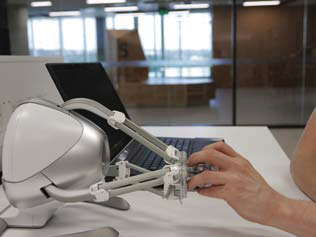
The experiment used a virtual reality nasendoscopy simulation — a sinus model with a Novint Falcon haptic device. Two groups of participants explored it: one with vision only, one with vision plus force feedback. We then tested their spatial knowledge of the anatomy. The comparison found no significant difference between the two groups.
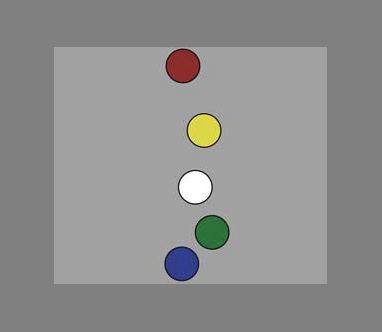

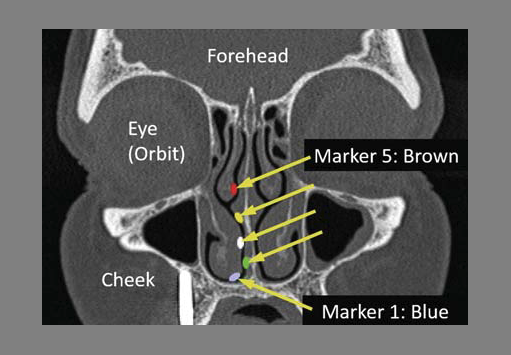
A comparison of two groups of participants (visual versus visuo-haptic) revealed no significant differences in their spatial knowledge of the simulation. The findings are discussed with reference to potential variables which may affect spatial learning such as cognitive load.
I think the negative result is the useful part. Force feedback demonstrably helps with tasks where the force is the information — cutting, probing, palpating. It does not automatically help you build a mental map of where things are, and the extra cognitive load of operating the device may well cancel out whatever the haptics add. That is a design constraint for anyone building a training simulator, not a reason to drop haptics.
The paper — Does Haptic Feedback Improve Learning and Recall of Spatial Information? A Study Using a Virtual Reality Nasendoscopy Simulation, by G.S. Ruthenbeck, M. Tlauka and A. Tan — was presented at Eurohaptics in London, 2016. The article is on ResearchGate.
A follow-on study with Michael Tlauka compared performance with and without force feedback over repeated attempts rather than a single session. Learning happened in fewer repetitions when force feedback was present. I will link it here once it is published.